
The Dawson County Court Calendar
For current and future hearing dates in Dawson County, Nebraska's Multi-Court Case Calendar is the place to look. It works separately from the JUSTICE case-information search. You can search by date or by last name. Either way, the tool then asks you to pick a court type and a county. Select Dawson County after choosing County Court or District Court. Not sure which one holds your case? Run the search both ways. A county-court preliminary hearing and a district-court felony setting live in different search contexts.
Think of the calendar as an appointment list. An entry may show a date, time, location, case number, caption, and hearing type. The register of actions tells you more. It lists the filings and later events that explain why a hearing was set at all. The Dawson County Court confirms the local county-court route, while the District 11 directory points to the parallel district-court route for Dawson matters.
Dawson County Calendar Controls
Date searches cover current or future settings only. A last-name search needs at least two characters. Set the court type before picking Dawson County, or a blank result may just mean the wrong court context. The state's official courtroom technology release describes the statewide access upgrade that powers this docket search.
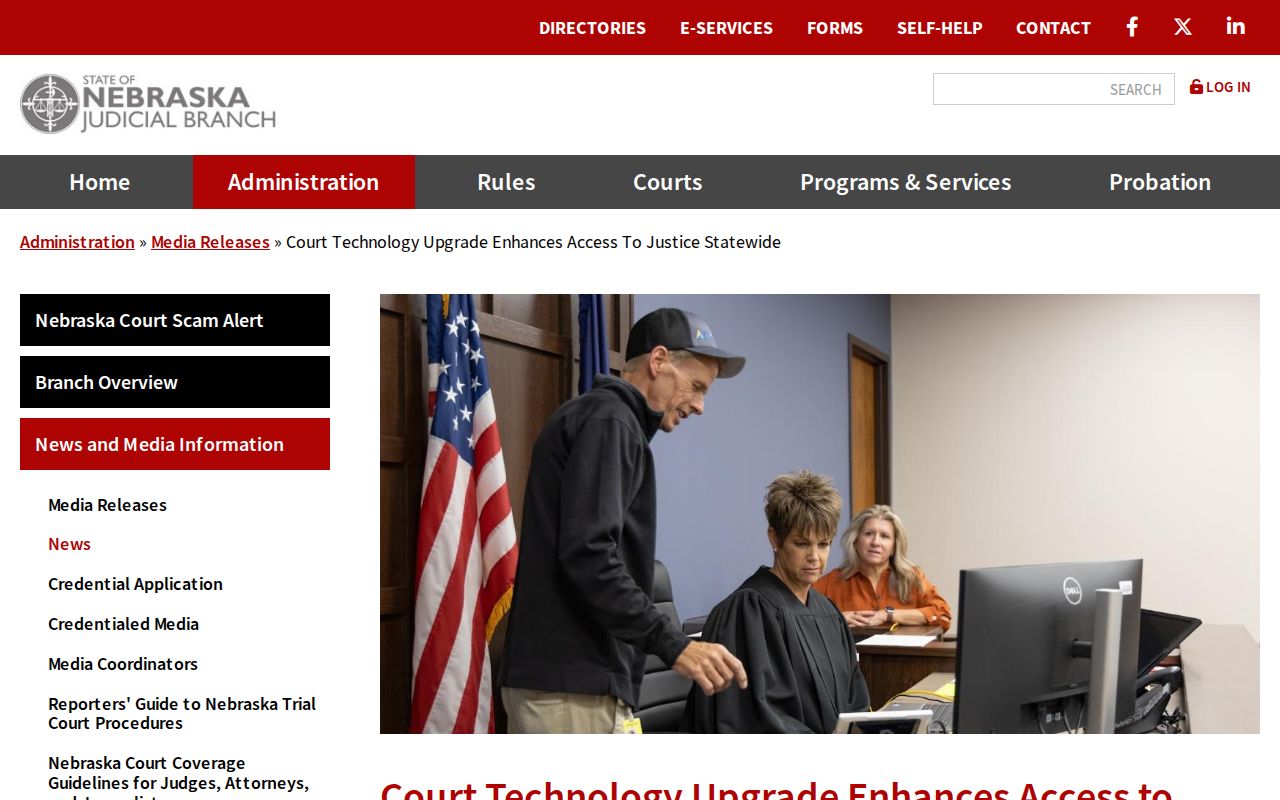
Better technology improves access to hearings. It does not make the calendar a live case register. When an event matters, confirm the setting against the case record itself.
How to Find Your Court Date
Start with the most specific fact you have. That is usually a case number, a hearing notice, or a party's last name. The calendar is the first online check for a court date. JUSTICE, the statewide case search, backs it up. Use it when you need to confirm a caption or case number. For a recent, unclear, restricted, or missing entry, the courthouse terminal still matters. So does the responsible clerk.
- Open the Multi-Court Case Calendar and select County Court or District Court, then select Dawson County.
- Search by the future hearing date or by a last name with at least two characters, and compare the caption and case number.
- Check the same case in JUSTICE case information when the register of actions is needed to identify the setting.
- For a close or missing date, call the appropriate clerk or ask at the courthouse's public terminal. No Dawson daily printed calendar or judge-by-judge schedule was documented in the research.
Which clerk you call depends on the court. County-court questions go to the county clerk. District-court questions go to the district clerk. An attorney of record may also have notice details, but the official calendar and the clerk remain the working checks for a current setting.
Dawson County Court Types
Calendar lines make more sense once you know which court set them. Dawson County Court handles traffic, misdemeanors, small claims, and probate. It also hears most juvenile matters and municipal ordinance violations. Preliminary felony hearings and civil matters within its limits appear there too. Dawson District Court takes felony trials and sentencing. Higher-value civil cases, domestic relations, appeals, and other general-jurisdiction work land there too. The District 11 directory is the official regional reference for that district route.
A county-court setting does not vanish when a matter moves up. A felony may start with a preliminary hearing in county court. It then picks up a separate district-court schedule. So keep the court name beside each date you find.
A Judicial Branch notice on county-court limits names them. It shows which civil matters can appear in the Dawson County Court calendar.
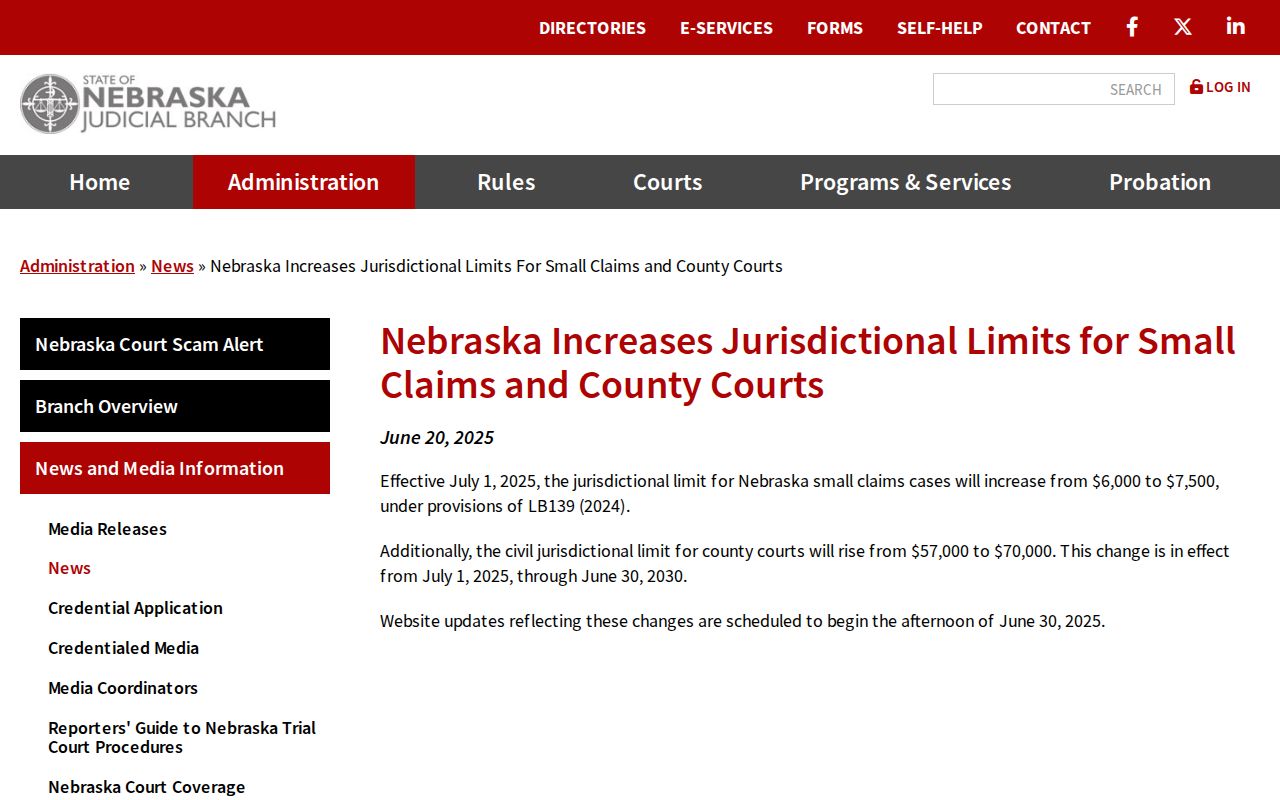
Jurisdiction points you toward the likely court. Still, the caption and case number are the safest way to tell two similar calendar entries apart.
Reading a Court Setting
A setting is just a scheduled court event. It proves neither that the event happened nor that the case ended. Match every calendar line to the caption and case number. Then open the register of actions. Learn there whether the event was continued, held, or followed by an order. The official calendar itself warns about entry delays. A listed time is a scheduling fact, not a final result.
| Date | The scheduled calendar day, which can change by order or continuance. |
|---|---|
| Time | The listed time for a docket call or individual event; it is not proof the hearing has concluded. |
| Location | The court location shown in the calendar. Confirm the court type before relying on it. |
| Case number | The identifier that connects the calendar result to the JUSTICE case record. |
| Setting type | The event label, such as arraignment, pretrial conference, motion hearing, trial, or sentencing. |
Note: A calendar date is an appointment; the register of actions records what the court later entered about that appointment.
Dawson County Setting Terms
Each label on a Dawson County court calendar marks a stage, not a result. An arraignment opens criminal plea procedure. A preliminary hearing tests probable cause in a felony case. A motion hearing takes up a request for a ruling. A pretrial conference may deal with scheduling, discovery, plea matters, or trial management. Treat each label as a prompt to check the register. It is never a substitute for the register.
- Continuance or reset
- A hearing moved to a later date. The new date should be verified.
- Status date
- A progress or check-in hearing, not necessarily a final outcome.
- Disposition
- The recorded outcome or procedural closure of a matter or claim.
- Sentencing
- The court's imposition of sentence after a conviction or plea.
Wording carries weight. A scheduled trial is not proof a trial happened, and a case marked for a plea or motion can still be continued before the event.
Resets, Continuances, and Cancellations
A reset or continuance simply shifts a setting to a new day. The Dawson County calendar may list that new date. The register of actions may still show the earlier hearing, a plea change, an order, or another event that explains the move. One caution matters here. A date vanishing from the calendar does not mean the case was dismissed. Read the register entry before drawing any conclusion about a missing setting.
When a hearing is close, check the calendar against JUSTICE. If the two disagree, call the clerk. Public case information usually runs about a 24-hour behind. The FAQ warns that fresh filings can lag even longer. For a same-day appearance, trust what the court itself is doing. A stale search result does not govern.
The Nebraska Public Records Act sets out the public-access rules that follow.
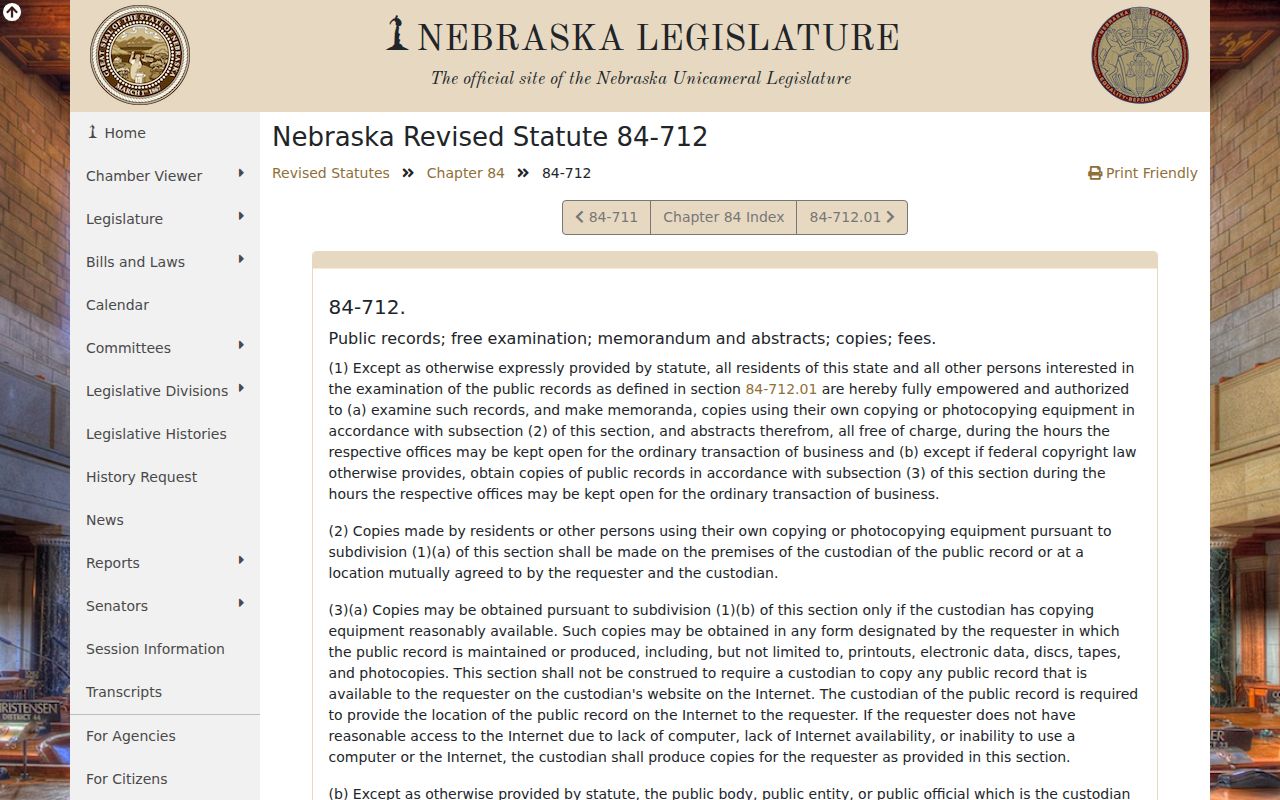
Public access rules do open calendar and docket listings to everyone. Even so, they promise nothing about speed. Some scheduling records stay restricted, and others reach the public display slowly.
Dawson County Calendar Delays
An empty online result does not prove the hearing is gone. The calendar itself warns that entries lag. A miss can stem from several things. You may have searched the wrong court type, spelled a name wrong, or found a hearing set days ago. A continuance, a restriction, or an entry that has not yet posted can do it too. So hold onto the case number. Ask the right clerk to confirm the date that actually controls.
For county court matters, the public Dawson court page gives the clerk office and phone. For the district side, the district-court clerk contacts list the matching Dawson District Court route. The calendar page also lists a statewide County Court Specialist number. It handles calendar-system help too.
Note: Even a complete-looking calendar entry deserves a clerk call. Use one when the hearing is the next day.
What To Do If You Miss a Setting
Call the responsible clerk right away. Identify the case, the court, and the setting you missed. Give the case number if you have it. Then ask what the register of actions shows since the absence. If you have a lawyer, contact that lawyer as well. The clerk can share administrative case information and point you to the right record. But clerks cannot give legal advice or strategy.
Missed a Setting? A missed criminal or traffic setting can lead to a failure-to-appear response, a warrant entry, or other court action.
Use the clerk and the public record to confirm the current status before making assumptions about a prior calendar line.
A warrant notation in an old docket entry does not prove a warrant is active today. For current status, confirm with the clerk or the proper law-enforcement office.
Dawson County Record Access
A calendar holds public court information, not the whole case file. Nebraska's Public Records Act backs your right to inspect and copy public records. Exemptions, fees, and reasonable rules still apply. Nebraska's electronic-record rules also keep certain material away from ordinary public view. That includes sealed, juvenile, adoption, and criminal-history files.
The statutory public-record definition covers computer files. That is why electronic calendar data counts as a public record. That breadth has limits. It does not unlock a restricted case or a sealed attachment.
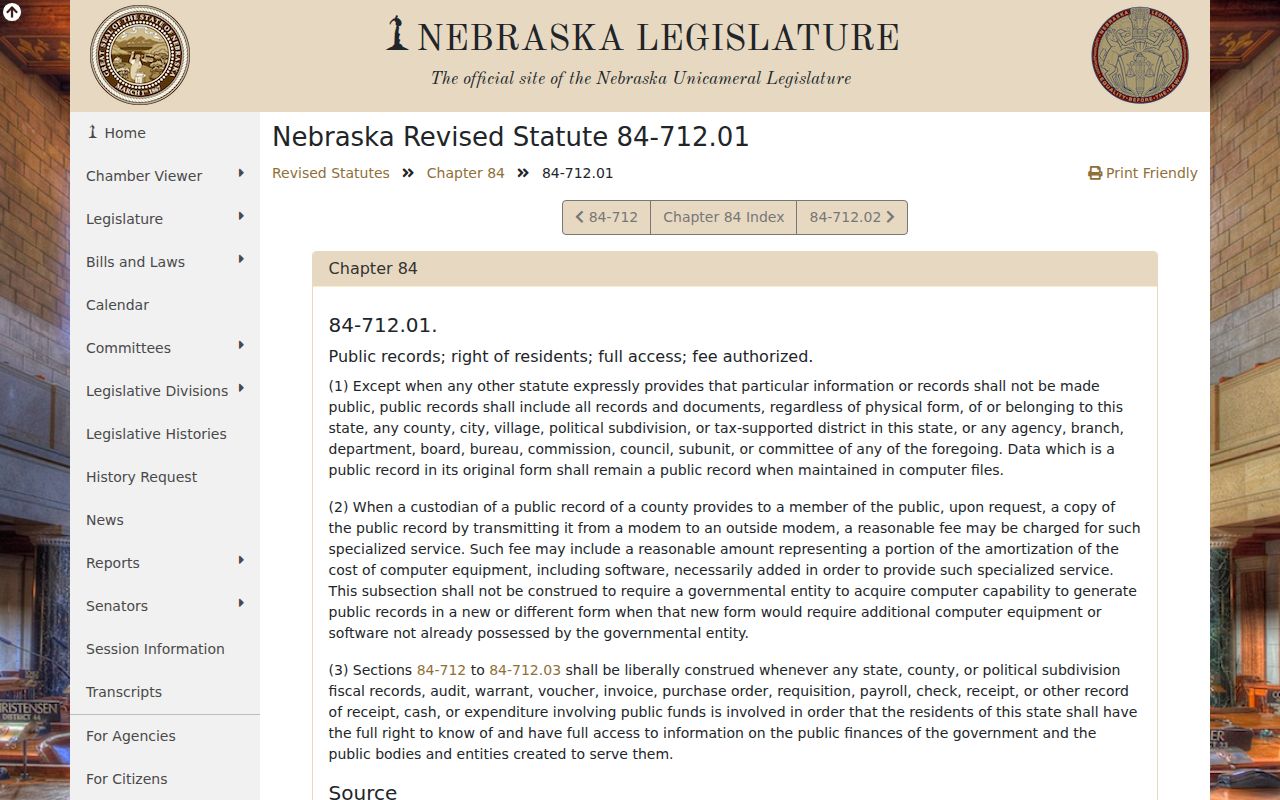
Want an order, a copy, or a full register beyond a calendar line? Name the court and request that specific record from the clerk.
Dawson County Court Technology
Nebraska's courtroom technology upgrades now support remote and in-court access across the state, rural courts included. None of that equipment merges the tools, though. The calendar finds scheduled events. JUSTICE supplies public trial-court case information. Nebraska eFiling exists for authorized users to file documents, not for the public to search hearing dates.
Keeping those roles straight prevents a common error. A filing portal will not verify a next-day setting, and a calendar hit does not prove a document was filed or made public. Match the tool to the exact question you are asking.