
How to Get Court Records
First, pin down the court and the case. The public JUSTICE case-information service can turn up a case number. It also gives the public register of actions. Searching remotely does not always give enough detail. A free JUSTICE terminal at the courthouse is a solid backup. From there the path is simple. Contact Dawson County Court or Dawson District Court and ask for exactly what you need, whether that is a plain copy, a certified copy, a transcript, audio, or a particular order.
- State the court, case number, caption, document, date range, and desired format.
- Use JUSTICE or the courthouse terminal to identify the public case and register of actions.
- Call or visit the right clerk, then ask whether the item is public, available, sealed, confidential, destroyed, or not yet imaged.
- Submit the appropriate form or written request and confirm the clerk's delivery method, estimate, and any required payment.
- Review the received pages and certification before treating a copy as complete.
The statewide court-records policy sends formal Nebraska Public Records Act requests to the State Court Administrator. A court-specific request should still name the exact record. Asking for every file tied to a name is not a request the clerk can work with.
Dawson County Clerk Routes
Dawson splits its clerk duties between county court and district court. Myndee Hagan is the listed Dawson County Court clerk. Becky Boryca is the listed Dawson District Court clerk. Both offices sit at 700 North Washington in Lexington. The district-court office is up on the third floor. Which court handled the case decides which clerk keeps the file. It also decides which office handles the request.
Dawson District Court
700 North Washington, 3rd Floor
Lexington, NE 68850
308-324-4261
Give the clerk a full party name, an approximate year, the case type, and the exact item you want; that makes locating a file far easier. Clerks manage records and copies. They do not give legal advice or case strategy.
Types of Court Records
A Dawson court file can hold a lot on its public side. The public portion may include a case summary and register of actions. Pleadings, orders, judgments, costs, and public images can appear too. What you need drives the best request. A register of actions shows what was filed and when. A signed order or judgment carries the court's written ruling. Transcripts and digital audio are different. They need a hearing-specific request and follow their own preparation process.
- Case summary and register of actions for filing, event, and status history.
- Pleadings, motions, answers, and public attachments where available.
- Orders and judgments, including certified copies when required.
- Transcript or digital audio requests for a specified hearing.
- Traffic citation and county-court records when a citation became a court matter.
Public availability shifts with the record type. A docket entry can be visible even when the attachment behind it is not open to ordinary copying.
Dawson County Request Details
Give the clerk a narrow target and the request moves fast. Helpful details include the full caption or party name. The case number helps, if you have it. An approximate filing year, the court, the case type, the date, and the document you want also help. The CC 3:30 copy invoice asks for case number, date, copy type, bill-to information, page count, seal count, and total. A broad request for everything tied to a name, by contrast, invites delay and guesswork.
One rule governs what the public can view. The electronic-filing public-view rule sets out which filed records a person may see.
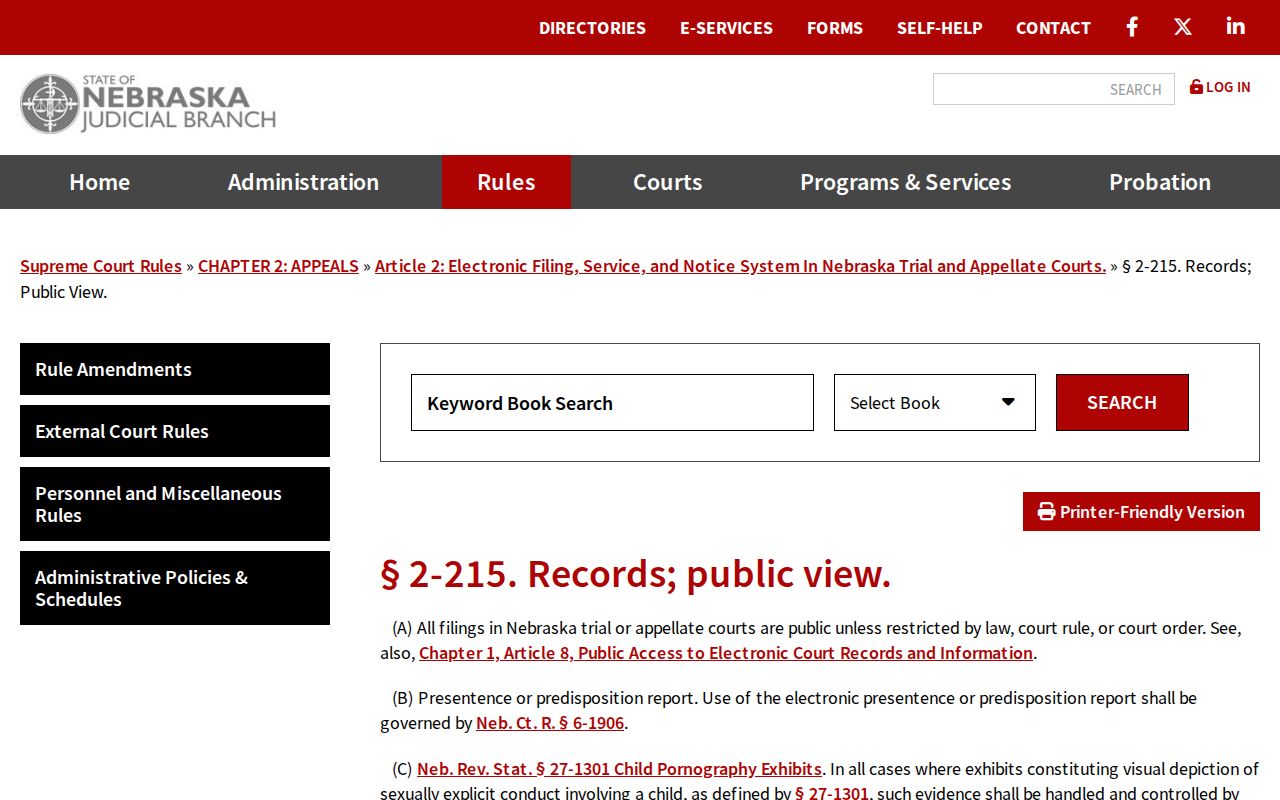
Electronic filing does not make every document public. Public view still depends on the record-access rules and any confidentiality or sealing restriction that applies.
What a Court Record Contains
A court record blends case-identifying fields with documents and docket events. The register of actions is the chronological trail. It can show the filing of a complaint or petition, a motion, a hearing, an order, a continuance, a judgment, a payment entry, or a disposition. Read the public record in sequence. That keeps a scheduled event from being mistaken for one that actually took place.
| Case number | The court's unique identifier, used by the clerk to locate the file. |
|---|---|
| Caption and parties | The case title and the legally defined roles displayed in the public record. |
| Register of actions | Chronological docket entries for filings, hearings, orders, and other events. |
| Pleadings and orders | Public filings and signed rulings that may be available as images or copies. |
| Costs and disposition | Public financial entries and the recorded outcome, where those fields are available. |
Certified copies get their authority through the clerk's authentication. When formal certification is required, a screen image or ordinary printout will not do.
Dawson County Public Attachments
A public docket index in Dawson County does not open every attachment to view. Nebraska's Article 8 rules spell out which electronic fields and images stay public, while items shielded by statute, rule, or court order stay sealed. For civil filings, the civil personal-information rule sets out exactly what the court protects.
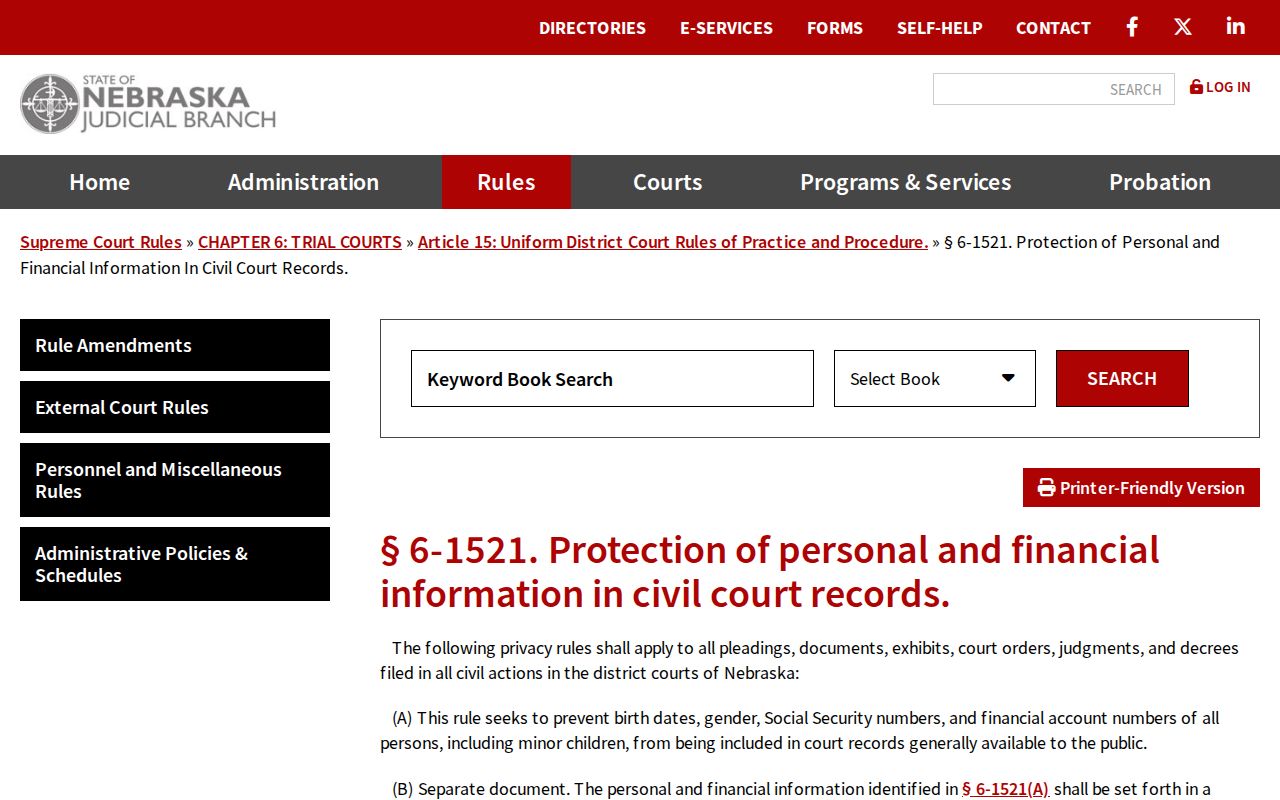
Dates of birth, Social Security numbers, financial-account numbers, and similar protected details are not a reason to ask for a broader copy. Civil filings can use a confidential appendix when that information is genuinely necessary. That keeps the rest of the docket open.
Certified Copies and Fees
A plain copy just reproduces the public record. A certified copy adds the clerk's authentication or seal. Some purposes demand that extra step. Before any work starts, have the clerk confirm the page count and seal count. Ask about the mailing cost and any other charge too. Nebraska's current county-court charge is $0.25 per page, and certification or a seal is $1. The records workflow also lists a three-seal authenticated certificate at $3.
| Item | Current official amount or rule |
|---|---|
| County-court photocopy | $0.25 per page under §33-126.05. |
| Certification or seal | $1 per certification or seal. |
| Three-seal authenticated certificate | $3 listed in the clerk-facing schedule. |
| Typed transcript | Estimate and payment are required before preparation. |
| Digital audio | Official descriptions differ, so verify the final amount with the Dawson clerk. |
Note: Court fee schedules and electronic-service prices can change, so a clerk-confirmed invoice is the operational amount.
Dawson County Copy Invoice
The CC 3:30 invoice separates the kind of copy from the page count. It also separates any seals. Because of that split, a case number by itself may not yield a final total. Start with the public register when the exact order is unclear. Then ask for the document by date or title. Once the record is identified well enough, the clerk can walk you through the copy procedure.
The Nebraska traffic information page explains how record access works for these cases.
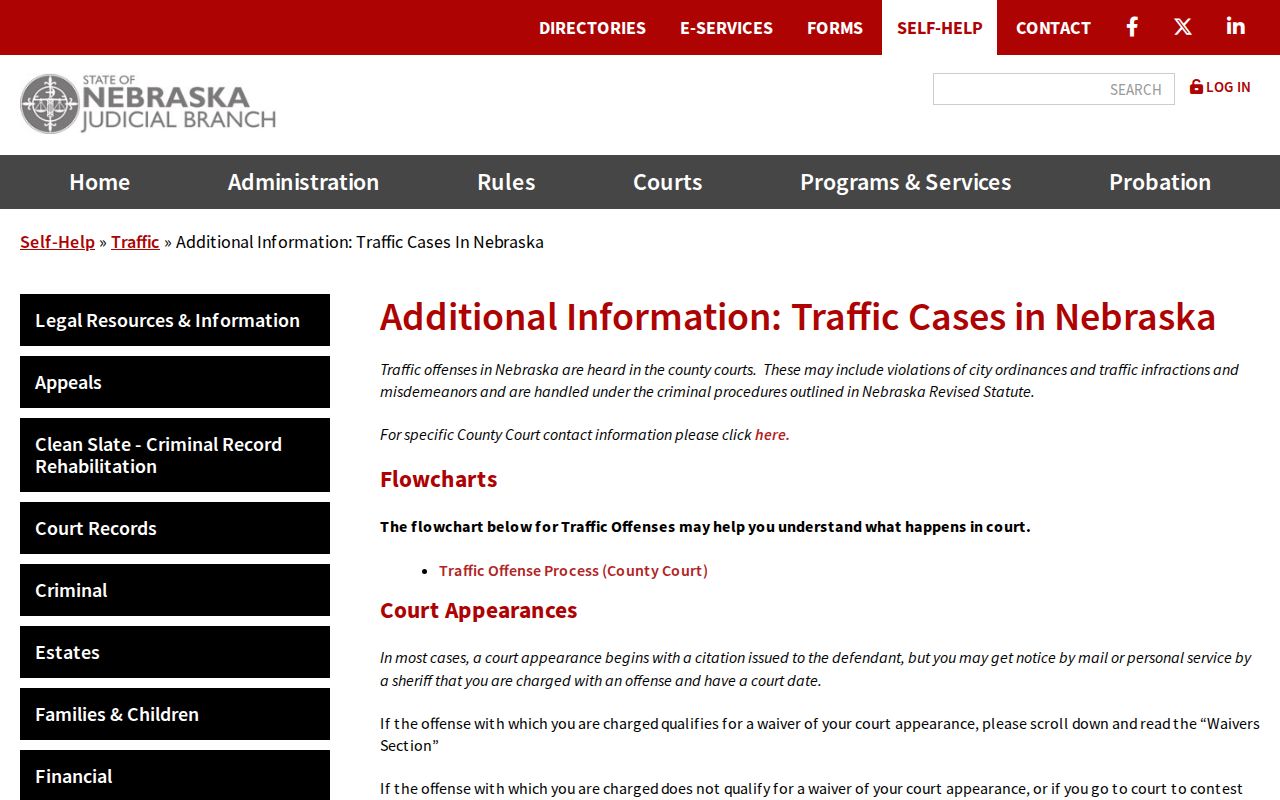
Once a citation becomes a court matter, traffic records need the same basic court, case, and document identification as any other county-court file.
Public Access and Sealed Records
Nebraska's Public Records Act lets people inspect and copy public records. The right comes with limits: lawful exemptions, reasonable rules, and fees still apply. Court records add their own boundaries. Sealed, juvenile, adoption, confidential personal-financial, and criminal-history material sits outside an ordinary copy request. When a document is missing, treat it as unavailable until the clerk identifies its status. That says nothing about the case itself.
Key Rules:
Neb. Rev. Stat. §84-712 supports inspection and copying of public records subject to lawful limits.
Nebraska Rule §1-805 identifies public electronic court information such as indexes, summaries, registers, and calendars.
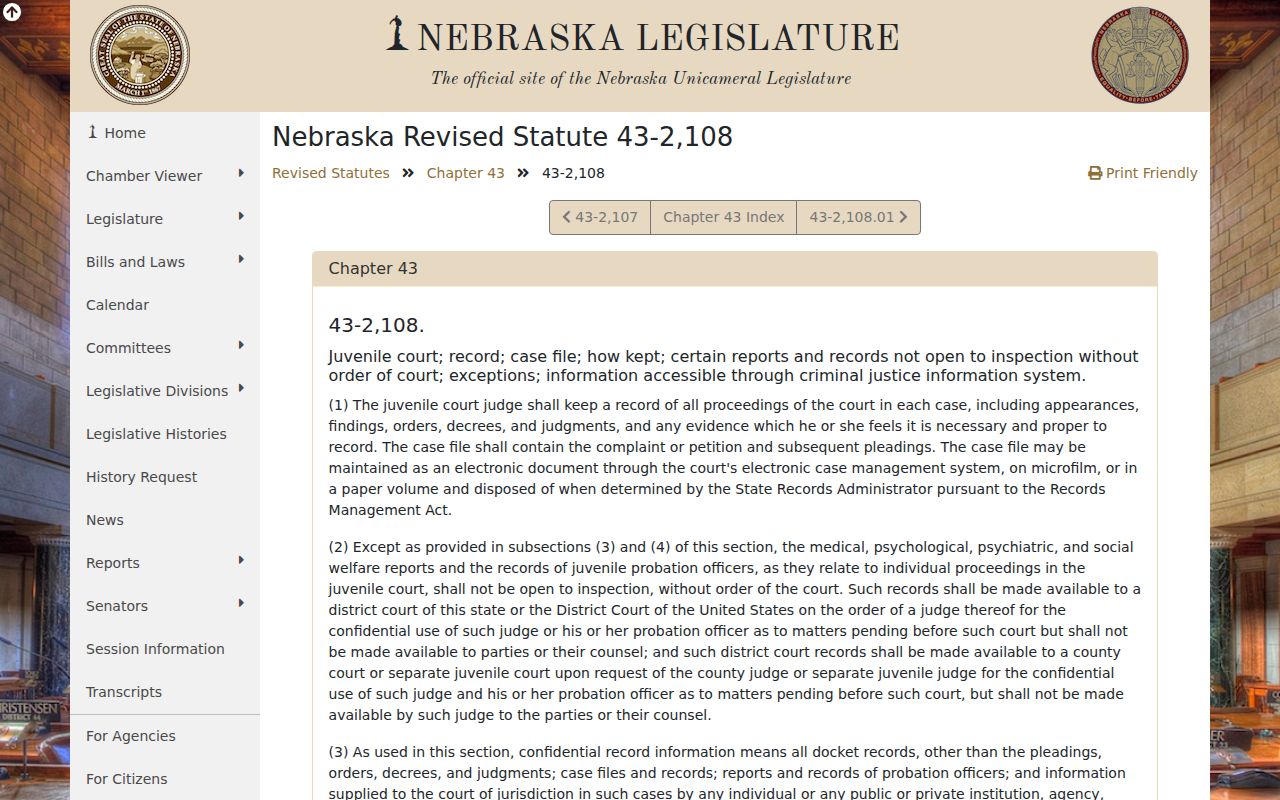
Neb. Rev. Stat. §43-2,108 makes juvenile records confidential unless access is authorized.
A formal Public Records Act request to the Judicial Branch goes to the State Court Administrator. The written-request framework generally calls for an availability estimate, a denial, or an extension explanation within four business days. None of that overrides confidentiality rules.
Dawson County Sealed Records
Sealed adult records do not surface in an ordinary public search. Nebraska's self-help route lets the subject ask for all or part of a sealed file. Copy, certification, and mailing costs may apply. A judge's order or other legal authority may be needed too. File the request with the clerk of the court where the case was filed. A nonparty may need court approval. The sealed juvenile-record statute sets out these rules in full.
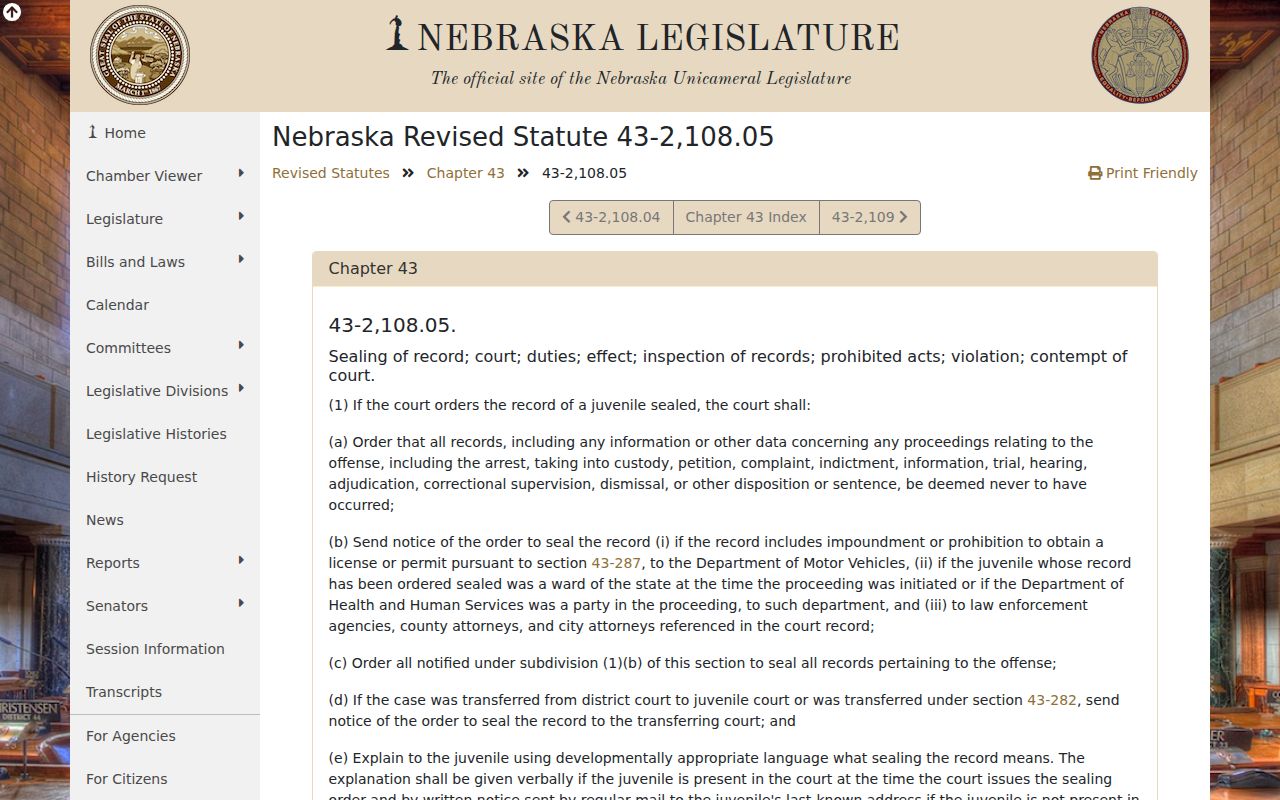
Sealing changes what the public can reach. Which route opens a record depends on the statutory authorization, any court order, and the requester's relationship to the file.
Dawson County Juvenile Records
Dawson County Court hears juvenile matters because Dawson is not one of Nebraska's separate-juvenile-court counties. That does not make juvenile records public. Section 43-2,108 limits access to the juvenile, counsel, a parent or guardian in appropriate circumstances, and anyone authorized by law or court order. So identifying details from a juvenile file are not ordinary public docket information. The juvenile confidentiality statute spells out who may see these files.
When a record is restricted, use the legal request route. Trying to reconstruct protected details from a partial public result is not a substitute.
Dawson County Transcript Requests
A typed transcript request should identify the county, case number, and case name. Include the hearing date, time, and location. It should also cover the judge, hearing scope, exhibits, requester information, and privacy acknowledgment. The court then prepares an estimate and requires payment before work begins. A nonparty may need judge approval. Digital-audio requests follow the same pattern: give hearing-specific information. Email or storage-device delivery may be an option. Audio is not the official court record, and protected content must not be published. Official materials describe audio pricing in different ways. The Dawson clerk is the final source for a current invoice. The same office can confirm delivery options and any required authorization.
Dawson County Retention Limits
Older files are not always available as online images. A record may predate electronic imaging. It may be temporarily unavailable. It may also have been destroyed under a retention schedule. The court-records policy lets the clerk provide a form letter explaining that status. But the clerk cannot issue a certificate that no record exists. A name search cannot recreate a destroyed file. Preserve the case number, search date, source, and the clerk's response. That narrow trail beats drawing conclusions from a blank screen or a missing document image.
Dawson County Citation Records
For a traffic citation, Nebraska runs a separate citation lookup. Fields cover citation type, county, citation number, date, cited person, address, and amount. Keep in mind that the tool is not a full case-file search. If the citation became a Dawson County Court matter, JUSTICE and the clerk can help locate the court record and register of actions.
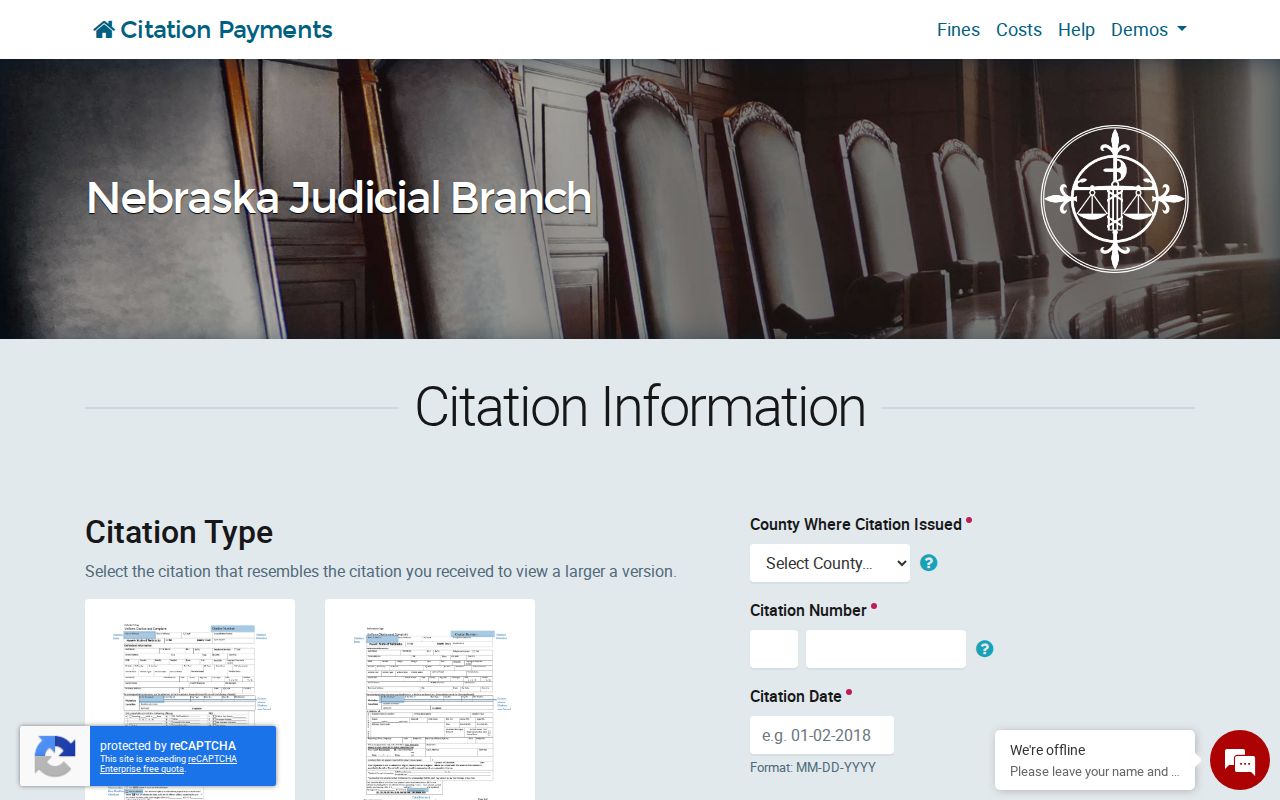
A citation number can start the search. For a specific public order, copy, or hearing record, the court case number and the clerk-held file are the better routes.